Monday, October 31, 2011


Wednesday, October 26, 2011
Ernst Karel - Swiss Mountain Transport Systems (Gruenrekorder)
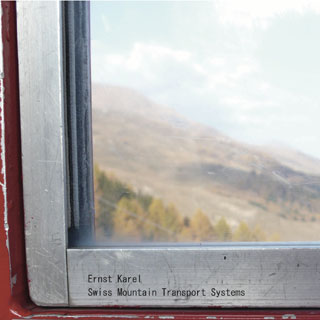
Many of us live in a state of near constant self-imposed sonic stimulation. We are forever talking on cellphones or listening to ipods, rushing from place to place with music and podcasts and satellite radio and videos streaming on our tablets. Meanwhile the world goes on around us. The irony of this is if one knows how to listen to the world - the real world - one can often find a soundtrack equally rich and stimulating and beautiful to anything we can think to cram onto our mp3 players. Ernst Karel - a sound artist and musician from Chicago - demonstrates this truth with jaw dropping aplomb on his latest release, "Swiss Mountain Transport System." The title of this album says it all. At close to 80 minutes in length, Karel offers his listeners a number of unprocessed field recordings taken on various gondolas, funiculars, and chairlifts in the mountains of Switzerland - from ancient, creaking gondolas to whirring, highspeed chairlifts. That's it. No instruments, no electronic processing, no synthesizers or oscillators or guitar feedback. And yet, despite that, Karel has created one of the most gorgeous, engaging, and fascinating albums of the year. It also happens to work almost perfectly as a drone or minimalist noise album. Through Karel's carefully positioned microphones, these means of mountain conveyance can be heard as accidental electro-mechanical music boxes, an entire world of sound contained in each car. They drone, they are percussive, they amplify and refract and echo and encase sound. Wires ring and reverberate, gears rumble and click, doors creak and whoosh. The mechanical and industrial intersects with other elements of the world - murmured voices across platforms, a peal of church bells off in the distance, a clang of cow bells, a clattering of helicopter rotors, frigid gusts of wind.
As Karel captures it, these unprocessed, unorchestrated sounds - largely mechanical and man-made but nonetheless "organic" in that they belong firmly to a lived environment, integrated in with the natural, and are not created as an end in themselves as with music or intentionally crafted sounds but rather exist as a part of the man/nature soundscape that is a byproduct of a world inhabited by living beings - are immensely affective and evocative. For an album that seems to be about movement, about traversing space, these recordings are incredibly successful not because they are beautiful - though they absolutely are - but because they evoke the mountains and they evoke transportation through that rugged terrain in a remarkably lucid way.
Recorded in stereo with multiple mics, this album truly comes to life when heard through a decent set of headphones. The sound envelopes the listener and we are whisked away through the Alps as Karel's recordings convey with remarkable clarity a sense of distance, of movement, of sound as it's really heard, in the real world. A collection of pure field recordings, it is perhaps ironic that in order to hear - as Karel has captured it - not only the utter beauty in the perpetual sonic landscape that surrounds us but also its incredible, inherent musicality that we must sit and listen closely, headphones firmly donned, without distraction. But one of the things that's so special about this album is that once you listen to it in this way, once you recognize the richness and depth of the world of sound that exists outside our headphones and in the most unexpected of places (we don't think of funiculars and gondolas as being all that interesting as such), it's possible to start discovering similar depth in places one experiences daily and simply never pauses to think about twice. As with all important and truly successful art, "Swiss Mountain Transport System" can radically alter the way one perceives the world.
Be warned: this album requires a good deal of patience. Many will find it boring but for those really willing to sit with it, its rewards continue to unfold listen after listen. It's refreshingly direct - a rarity in our world of ultra-processed music - and restrained, elegant and as simple as can be. At the same time, it's deeper and more nuanced than pretty much anything I've heard in a long while. A completely essential listen, one I cannot recommend highly enough.
Monday, October 24, 2011
Maryanne Amacher at Ars Electronica, 1989
Thanks to Maxwell @ Root Blog for the link
more posts coming soon, including stuff by Ernst Karel, Catherine Christer Hennix, Roland Kayne, Aaron Martin and more.
Saturday, October 1, 2011
Svarte Greiner - Twin and Miscellanea
Svarte Greiner is the solo project of Norway's Erik K. Skodvin, perhaps better known as one-half of Deaf Center. For years now, Skodvin has been taking cello, electronics, tape, and what sounds like mic'd scrap metal and turning out haunted soundscapes, blackened to a pitch, steeped in nightmares, owing, it seems, a huge debt to our primal fear of things that go bump in the night. Earlier this year, Deaf Center put out their newest album, the obliquely titled Owl Splinters, and included with a limited number of the first pressing a bonus CD. Type, the label that put out Owl Splinters, has gotten into the habit of doing this, rewarding fans who manage to snap up a copy of many of their albums before they inevitable go out of print and start selling for four times the original price on discogs and ebay. Recent LPs by Yellow Swans, Richard Skellton, Jefre Cantu-Ledesma, and Rene Hell to name just a few all had free bonus CDs. It's a really wonderful trend, especially since these bonus CDs are far from random, cast-off freebies; Generally they account for enough music to constitute a wholly separate album. That's certainly the case here with Twin, Owl Splinter's bonus CD containing a single, nearly 46-minute track from Skodvin under the Svarte Greiner moniker. It's hard to tell but this piece may be a reworking of material from Owl Splinters. In any event, it's entirely it's own beast and probably the best thing Svarte Greiner has done to date.
Twin starts off with an oceanically deep loop of droning processed cello. It almost sounds like the solemn chanting of a long forgotten sect of Alpine monks huddled in their frost encrusted monasteries hewn from the mountains themselves. This loop builds upon itself, adding dimensions, taking on a ragged edge, pulsing with sinister harmonics, fraying tendrils of static, a sawing rasp of tangled feedback. The intensity rises through the first third, eerie and laden with menace, the sound, perhaps, of a fractured and ever-disintegrating world. At the same time it is an ancient, almost primal sound. This isn't music for the end of the world by machines; rather it is the soundtrack to the terror of night and the unknown violence therein surely felt by our early ancestors, cavemen praying for a splinter of flint to throw - even for a moment, even if just a spark - some light into the perpetual black. A slowly heaving, wailing, crumbling, roaring pulse of drone washes over the listener.
Around the 16-minute mark, things change. The bellow and roar of the first third is gone. A siren-like sweep of electronics washes out over an utterly desolate expanse of ghostly ambiance. A tangle of murmuring, chaotically bowed strings rises and falls through a dank mist of analog murk - reminiscent of Xela's The Sublime but less minimal, more deeply layered. Percussion like snapping tree limbs, rusted metal on rusted metal, creaking door hinges is woven into this tapestry or sound
Twin's final third is almost suffocatingly intense. Loops of decaying cello, a funereal organ, disintegrating bits of tape and static - dissolving audio detritus threaded throughout. The final minutes are all organ in full dirge, long forgotten radios playing out their final, static-ridden moments of life. It's black as pitch, an apocalyptic, scorched earth blast to sing us into oblivion.
And yet, despite all this, Twin is exceptionally beautiful. Bleak, yes, but it's clearly the work of a master craftsman. Immensely affective and evocative, fans of drone, noise, and even modern and avant-garde classical alike should give this a serious listen.
Included in the download are some other rare Svarte Greiner goodies. Rips of the Ragsokk and Depardieu 7"s from 2006, plus a track from the SMM: Context compilation put out by Ghostly International last year and the 18-minute long "A Night Without Harm," a live recording from early 2007. Nightmares for everyone!!
Saint Yorda
I don't know much about Saint Yorda - or anything really - other than one of the members of the band is named Kevin and he sent me this link. I'm pretty sure "Some Songs That We Recorded With Cathal" isn't an album title and this is more or less a collection of songs but it's well worth a listen in any case. If you live in the North East, autumn is officially underway and this collection of songs is perfect for the season. Languid and cool, a bit foggy, these songs make a great soundtrack to chilly, gray fall days like these. There are vocals with some wavering echo and reverb, skeletal electronic beats and a scattering of bleeps and bloops - syncopated, almost danceable in a kind of codeine-induced way (especially on the track "Sakawa Boys"). Some of the band's influences seem pretty clear. Beach House fans will fall in love with a lot of these tunes. The track "Ocean" quavers and thrums like a Grouper track. "Death Ray" sounds a heck of a lot like more recent Radiohead tracks in the best possible way. "Surf Song" is just that - a very surf-y track but more along the lines of something Julian Lynch or possibly even Dirty Beaches might turn out with an ultra-simple drum machine loop adding percussion. "Yr Bones" is a mournful, synth heavy song, reminiscent of a sad song off a soundtrack to a John Waters movies. None of which is to say the band is mimicking these artists. Saint Yorba definitely has a sound of its own but it's one that cuts across a bunch of genres that other artists have colonized. In any event, it's well worth a listen. Check out some of their tunes below and follow the link to their bandcamp page where there's more to hear and download.
Bandcamp
Bandcamp
Friday, September 16, 2011
Nicholas Szczepanik - Please Stop Loving Me

Please Stop Loving Me, the meticulous, hypnotic new album from Nicholas Szczepanik (a name that's about as hard to type quickly as it is to pronounce) is a single 47-minute long piece of utterly transportive, thickly layered drone. Guided by a single organ note that subtly shifts, ebbs, and flows, this album-length piece is like an entire symphony in terms of scope and emotion and movement but one collapsed into itself and then slowed to the speed of plate tectonics. In terms of momentum but also scale, this album is akin to some kind of sonic continental drift. And I mean that in the best possible way; Please Stop Loving Me is stunning from its deep, echoing intro - murmuring like a hymn heard in the womb - through its glistening, resplendent middle passage, and into its shimmering, crystalline final act. Tim Hecker and Szczepanik are contemporaries and there are shades of the former's benchmark setting Radio Amor here but this year Szczepanik has bested Hecker, himself one of the very best in the biz. Both men put out albums of deep, expansive drone music with a heavily processed church organ taking center stage. Ravedeath, 1972 - Hecker's contribution that features the mighty Ben Frost on production duties - may be great but it doesn't achieve the emotional depth or sonic richness found here. Szczepanik's organ and electronics come at times with the mournful quietude of whispering ghosts, at others with the solemn grandeur of a dying star. There's even a glorious moment near the end where the instrument rings out joyful, elating, full to the brim with light, before fading ever so gently into silence. Please Stop Loving Me is not only one of the best drone albums of the year, it's one of the best things I've heard this year of any kind.
Download
Buy
Tuesday, August 16, 2011
Sunday, August 14, 2011
Liz Harris (Grouper) - Mirror Hall pt. 1: Jeweled Light

Last year, Liz Harris better known to the world as Grouper released a small art book on the venerable Root Strata label. Liz's art is actually quite evocative of her music in some ways. It's often incredibly dense, made up of repeating, interwoven patterns and is quite beautiful. But for me, the real point of interest was the dvd that came with the book. Clocking in at over an hour long, the movie is a continuation of Liz's art in moving images and, given that there's music playing the whole time, in sound - the medium by which we know her best. What we have here is that piece of music, all 66 minutes of it. The piece is an epic tape collage, water logged, absolutely drenched in reverb and murmuring static. Field recordings filter through the murk at times, distant and bathed in fuzz or hazed almost to the point of pure texture. Around a quarter of an hour in, Liz's trademark electric piano, trembling and melancholy rises to the surface, contending with a veritable avalanche of static that sounds like a hurricane heard from some bunker deep underground. Around 25 minutes in, thing turn sinister, a menacing series of overtones - courtesy of Rob Fisk on viola - cut through the swirling swoosh of decaying radios and distant thunderstorms that have taken us this far. Voices can be heard in far off corners, a thrum of reverb and a menacing low, almost reminiscent of the quieter moments from The North Sea takes us down dark corridors, ghostly and dreadful. Eventually we are back in the world of gently murmuring static, wind in microphones, the sounds, perhaps, of a city far beneath, interrupted by at long last by Harris' voice as we've come to expect it - a chorus, fragile, mournful, utterly haunting and lovely. We veer then into more straight up drone territory, the static is all but gone, pianos ring out, waver, keen, mournful, beneath an almost Stars of the Lid dronescape. This passage is transportive, entrancing, lovely and sad. After the 50 minute mark, we're back in Grouper territory, drone-y and washed out, reverb and static, flickering, hazy vocals. More static. A single, plaintive piano wanders, picks up a sinister clip over an ever growing mess of feedback - again shades of the North Sea here - and this too then gives way to yet another Grouper-esque moment of keyboard and static wash. With five minutes to spare, there is more darkness, more rumbling like forgotten machines built for nefarious purposes, a buzzing line of feedback over a wash of static like cars passing over rainslicked pavement, slowly fading into silence.
Download
Unfortunately Divide is sold out but you can buy more great stuff from Root Strata here.
Tuesday, August 9, 2011
The Ghost of 29 Megacycles - Love Via Paper Planes

Download
Band's Website
Monday, June 20, 2011
Seaworthy
It's a new day and Hollow Press is back online. After weeks of crazy deadlines and adventures the musical spelunking can once again commence. We're kicking things off with three releases by Australia's Cameron Webb aka Seaworthy, a maestro of guitar and electronic minimalism.

First up is "Codes Adrift." Released in an edition of 100 CD-Rs, placed in hand made envelopes, and sealed with wax by the now tragically defunct Sound&Fury records, "Codes Adrift" is two untitled tracks sprawling out over just under half an hour. The two pieces could almost be one, a quietly pulsing and sublimely peaceful journey comprised entirely of looped and layered guitar tone and feedback. The sensation of listening to this record is of one sitting on a small boat in the middle of an absolutely endless sea but being completely at peace with this fact. A wistfully lulling siren call shifts and lows, an almost organ-like thrum, while Webb picks and plucks his guitar quietly around this softly swirling ebb and flow. Although some new elements creep into the track 2 - bits of static and softly glitchy pulses rattle and whisper, lonely and nostalgic; the volume and intensity picks up - the sonic journey "Codes Adrift" takes listeners on is essentially without interruption. The two pieces feed into one another and, like the tides they seem to draw inspiration from, could pulse inward and outward forever. It's a powerful yet delicate piece of music, decidedly minimal but incredibly deep.
Codes Adrift
Codes Adrift is long out of print and probably can't be purchased anywhere. Sorry!

Next there's "1897," an album recorded entirely in an old ammunition depot from the titular year. Once again Webb's guitar playing is at the fore here although meditative electronic thrum and lovely field recordings of wind, birds, rain, and running water are woven throughout, creating a fully realized sonic world, one that drifts through haunted corners of dusty attics and over rainswept meadows, mournful and brimming with melancholy. One of the most impressive parts of this album is the timbre of Webb's guitar, at times reminiscent of Loren Connors, which picks up a huge amount of natural reverb from the physical space in which the album was recorded. But some tracks are far more electronic heavy than others, eschewing traditional guitar sounds altogether. Sparse, glowering drone pieces crop up amongst the rippling guitar and delicate sigh of wind and rain through leaves. Stark and chilly, this isn't happy listening but it's perhaps Webb's best to date.
1897
Buy or go here

Finally there's "Map in Hand," a rather different album from the last couple but still definitely part of the Seaworthy oeuvre. "Map in Hand" is more hopeful, a warmer and overall more involved production. Electronics play a bigger role, the guitar is less prevalent, at least in it's traditional state. While many songs on "1897" are just Webb improvising on guitar with little to no significant processing, "Map in Hand" is more concerned with creating glowing, densely layered soundscapes. Rather than stark and mournful, these are more transportive, crackling with analog buzz and thrumming with strange energy. The result is soft and languid and beautiful. It's not a very easy album and will bore some but for those with the patience it's wonderful and rewarding, a perfect soundtrack to a late night summer drive through the country, surrounded by dark fields but warm and secure and speeding into the unknown.
Map in Hand
Buy or go here

First up is "Codes Adrift." Released in an edition of 100 CD-Rs, placed in hand made envelopes, and sealed with wax by the now tragically defunct Sound&Fury records, "Codes Adrift" is two untitled tracks sprawling out over just under half an hour. The two pieces could almost be one, a quietly pulsing and sublimely peaceful journey comprised entirely of looped and layered guitar tone and feedback. The sensation of listening to this record is of one sitting on a small boat in the middle of an absolutely endless sea but being completely at peace with this fact. A wistfully lulling siren call shifts and lows, an almost organ-like thrum, while Webb picks and plucks his guitar quietly around this softly swirling ebb and flow. Although some new elements creep into the track 2 - bits of static and softly glitchy pulses rattle and whisper, lonely and nostalgic; the volume and intensity picks up - the sonic journey "Codes Adrift" takes listeners on is essentially without interruption. The two pieces feed into one another and, like the tides they seem to draw inspiration from, could pulse inward and outward forever. It's a powerful yet delicate piece of music, decidedly minimal but incredibly deep.
Codes Adrift
Codes Adrift is long out of print and probably can't be purchased anywhere. Sorry!
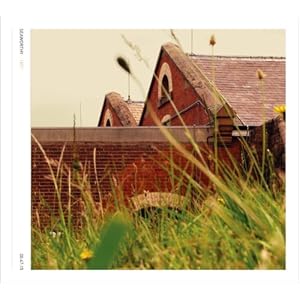
Next there's "1897," an album recorded entirely in an old ammunition depot from the titular year. Once again Webb's guitar playing is at the fore here although meditative electronic thrum and lovely field recordings of wind, birds, rain, and running water are woven throughout, creating a fully realized sonic world, one that drifts through haunted corners of dusty attics and over rainswept meadows, mournful and brimming with melancholy. One of the most impressive parts of this album is the timbre of Webb's guitar, at times reminiscent of Loren Connors, which picks up a huge amount of natural reverb from the physical space in which the album was recorded. But some tracks are far more electronic heavy than others, eschewing traditional guitar sounds altogether. Sparse, glowering drone pieces crop up amongst the rippling guitar and delicate sigh of wind and rain through leaves. Stark and chilly, this isn't happy listening but it's perhaps Webb's best to date.
1897
Buy or go here

Finally there's "Map in Hand," a rather different album from the last couple but still definitely part of the Seaworthy oeuvre. "Map in Hand" is more hopeful, a warmer and overall more involved production. Electronics play a bigger role, the guitar is less prevalent, at least in it's traditional state. While many songs on "1897" are just Webb improvising on guitar with little to no significant processing, "Map in Hand" is more concerned with creating glowing, densely layered soundscapes. Rather than stark and mournful, these are more transportive, crackling with analog buzz and thrumming with strange energy. The result is soft and languid and beautiful. It's not a very easy album and will bore some but for those with the patience it's wonderful and rewarding, a perfect soundtrack to a late night summer drive through the country, surrounded by dark fields but warm and secure and speeding into the unknown.
Map in Hand
Buy or go here
Subscribe to:
Comments (Atom)