Wednesday, October 3, 2012
Nate Wooley, Paul Lytton, and Ikue Mori - Live at The Chapel of the Holy Innocents, Bard College, 03/08/2011
Trumpeter Nate Wooley, percussionist Paul Lytton, and electronics/laptop
noise-ateer Ikue Mori came together at Bard College in the spring of 2011 for
this 40-minute improvised set, and I’m fairly sure this is the one and only recording
that exists of the performance (thanks to Goro, I believe, for capturing it). Lytton's drumming swings from propulsive and
cacophonous to nuanced and textural. Mori's electronics are scattering, piercing,
and industrial-ish, with whooshing swarms of feedback and crumbling static thrum.
Wooley, as always, proves himself to be an incredibly exciting horn player, relying
almost as much upon the instrument to modify the sound of his breath as the
opposite, and seamlessly shifting between dizzying free-jazz assaults and far
subtler, more textural sound explorations. There is very little friendly about
this piece. It’s unsettling, even hostile, and at times downright ferocious.
It’s a thrilling listen, however, in part because all three performers seem
truly in sync with one another on a really meaningful level, taking the piece in
unexpected directions that just work.
This kind of music and approach to performing can so easily fall flat and
become aimless and meandering if all the performer’s aren’t at the top of their
game. Luckily (and not at all surprisingly) Wooley, Lytton, and Mori knock it
out of the park.


Tuesday, October 2, 2012
Altar Eagle - Nightrunners

Altar Eagle is Brad Rose (who somehow finds the time for at least a half-dozen musical projects in addition to running the excellent Digitalis label) and Eden Hemming Rose, a husband-and-wife duo out of Tulsa, Oklahoma. Because Brad is best known for his work as The North Sea and with Ajilvsga, an unwary listener might sit down with an Altar Eagle album (in addition to this new one, there's also 2010's excellent "Mechanical Gardens" and a handful of cassette releases as well) prepared for nightmare dronescapes. They would be shocked then to find themselves instead listening to blissful electro-pop. Of course, this pop music is quite a bit scuzzier and more washed out than the pristine production you might find on, say, that new Purity Ring record, or the ultra-chilled sounds on the Digitalis-released "Ro Me Ro" by Paco Sala (another stellar album from this year). Industrial clatter and bitcrushed scree distort and warp these glistening pop gems, almost like someone rubbed a bunch of gravel over some long-lost Cocteau Twins LP. The husband-wife duo draws from a deep reservoir of influences here: The bass line on "Carousel Ocean" is a dub-y groove, "Digital Gold Futures" is as texturally dense as the best shoegaze, "Runaways" sounds like an ultra-cool Dark Wave classic, "No Spring Till Summer" is funky as hell, with lushly layered vocals and even some shades of New Wave, "Hologram" has an almost club friendly beat, albeit one that's deeply offset by vocodered vocals, and mangled production. It's hard to pick the standout tracks, because they're simply all so good.
"Nightrunners" is constantly surprising. Anchored more than ever by Eden's just-washed-out vocals and featuring more addictive hooks and woozily cathartic bursts than ever before, it's catchy, even danceable at times. Still, there's so much fantastic production work going on that it almost feels like time with the album is better spent picking up the nuances. In any case, the result is a gorgeous, haze-blasted piece of electro-pop. In a music scene glutted with sterilized, derivative synth-pop, it's an absolute relief when an album comes along that plays with conventions and reconfigures them in exciting ways like this one does. Maybe Brad Rose's hellish industrial soundscapes aren't too far removed after all. More than any album I've heard in recent memory, "Nightrunners" proves that there can be common ground between noise purists and indie-pop diehards. It's easily one of the best records of the year so far.
Saturday, June 16, 2012
Ibex - War Zone Pirate Radio Transmissions Sent and Received
After a long hiatus, this post marks an attempt to restart this blog. It may be slow going at first, but hopefully posting will pick up soon. In the meantime, here's a new album to listen to.
http://ibex-band.bandcamp.com/album/war-zone-pirate-radio-transmissions-sent-and-received
Composed and recorded 2011-2012 in Upstate New York, New Jersey, and San Francisco. Music for guitar, synthesizer, found sounds, field recordings, stock audio, Buddha Box, sutra box, radio, and assorted percussion.
Friday, March 23, 2012
Best Albums of 2011 #1 Ben Frost and Daniel Bjarnason - Solaris (Bedroom Community)

As predicted, this Best of 2011 list is wrapping up well into 2012. This blog has been on hiatus because of a trans-continental relocation but now hopefully (maybe) it'll get back on track. We'll see. But at the very least I had to finish the list. In the number one spot, we have a collaboration between two of my very favorite artists courtesy of the great Bedroom Community label which, despite regularly sporting some of the worst album art in the biz, consistently release some of the most exciting albums in any given year. Consider Daniel Bjarnason's Processions, my favorite album of 2010 - a dizzying, ferocious modern classical excursion; Or Ben Frost's By the Throat, my favorite album of 2009, a serrated, brutally intense swath of industrial noise and nightmare soundscapes. No surprise then, when the two join forces with Solaris, a reworked film score of sorts for Tarkovsky's eerie sci-fi masterpiece (note the album cover homage), the result is a brilliantly crafted and beautifully deep piece of work. Frost and Bjarnason get to show off their subtle side with this collaboration. It's a definite shift from their solo work, yes, but still deeply affecting and powerful, a consistently surprising and altogether brilliant melding of man and machine. Acoustic chamber music takes an excursion into the future into some kind of deep space nightmare, grappling with electronic and computer processing, conjuring images of flickering passageways winding through seemingly abandoned spaceships, the crew mysteriously vanished. Keening, mournful suites for skittering strings and warbling, off kilter piano are filtered through gauzey swaths of rumbling drone, bleared static, menacing creaks and piercing buzz. It's a quiet album, largely lacking the earsplitting mechanical terror of Frost's work and the dizzying crescendos of Bjarnason's. But quiet hardly means static. Solaris constantly surprises the listener. A rising piano attack suddenly fractures, fragmenting into splintered notes. Violins slide down in pitch woozily off-key. The whole experience is deeply unsettling and strange. Solaris is that rare musical collaboration where neither member dominates and where the music highlights the talents of each in a cohesive new whole rather than trading off moments where one takes the fore then the other. It's a taught, compact, and bleak piece of work and easily one of the most engaging and exciting released of 2011, one I happily call Best of the Year.
Link Removed by Request
Best Albums of 2011 #2 Ezekiel Honig - Folding in on Itself (Type)

I generally write my own description of the albums I post here but the description from the Type website is simply too good. So here it is:
"Describing the musical output of Ezekiel Honig is always the hardest part. It’s related to techno, but the pulsing 4/4 beats are pushed so far into the background that they simply become another texture in the sprawling ambience. And that doesn’t mean to say the music is ‘ambient’ either – the structures are far deeper than musical wallpaper that achieves that label right now. New York-based Honig’s latest album and Type debut ‘Folding In On Itself’ doesn’t make his music any easier to describe but does a lot to clarify the mood. This is deeply melancholy music, and while it doesn’t revel in sadness, it conveys a sense that the things we grew up with and see disappear can never be recaptured. Memory and the corruption or distortion thereof is at the core the record, and like the cover which is made up of hazy family snaps of a changing Manhattan, Honig has tried to capture a sense of entropy in his quickly disintegrating city.
Using a palette of locally recorded environmental samples, decayed acoustic instruments and the unusual, clattering percussion that has become his signature, ‘Folding In On Itself’ is probably Honig’s most measured and defining record. Elements of his previous work are still present, heard most obviously the breakthrough ‘Surfaces of a Broken Marching Band’, but every tiny part has been trimmed and honed with a selfless attention to detail. From the lilting processed horns and clipped percussion on ‘Subverting the Memory of Your Surroundings’ to the noisy, slowly decomposing piano of ‘Drafting Foresight’, there is a sense that Honig has distinct story to tell, and that every track on the album is a unique part of the same object. Far from a random collection of tracks, ‘Folding In On Itself’ is an introverted collection of musings on change and loss, and is as softly spoken and moving as anything we have put out on Type to date. Handle with care."
Not much else to say. Folding in on Itself is fantastic. It's like nothing else I've ever heard. I was listening to it a few months ago while sitting on the PATH train heading into New York City. I was wearing earbud headphones with the volume set fairly low. As I was listening, I realized that the sounds of the train - the rattling, rumbling, whooshing, reverberating mechanical acoustic sounds - were filtering in, layering over and seeping into the music. It took me a while to notice however because those sounds, rather than distracting, simply fit perfectly into the pieces Honig presents here - not filtering under or over but within. When an album can work in radically different contexts - and not only work but offer up a new listening experience and even a new way of hearing other things - it's surely something special. Folding in on Itself is one of those rare albums.
Saturday, January 14, 2012
Best Albums of 2011 #3 Colin Stetson - Judges 2: History of New World Warfare (Constellation)

Bass saxophonist Colin Stetson clearly has an incredibly deep and intuitive sense of the power of microphone placement. Judges 2 is essentially a live album, recorded in a single take with no instrumental overdubs or processing to speak of (at least not of the saxophone, almost the sole force on this album). And yet the album sounds like some ferocious, immense whirlwind, a demonic army of musicians producing a giant, pulsing, overwhelmingly powerful tapestry of sound. Instead it's just one guy with a giant horn surrounded by mics. Some are far away and pick up the saxophone as a distant thrum. Others are placed directly in front of Stetson, capturing his gasping breath, his vocalized cries through the reed, the pulsing percussion of his fingers flying over keys. These sounds are layered, spilling over and into one another. In Stetson's hands dizzying arpeggios, siren squalls, lowing foghorns, timbral dronescapes, and more come together to form an album that is by turns bleak and desolate, eurphoric and elating, and always, moment by moment, surprising, arresting, even awe inspiring. Stetson's enthralling instrumentation is accompanied on several tracks by a beguiling tone poem of sorts. This semi-narrative tells a tale of blackened landscapes, desperate flights from nameless terrors that for some reason feels strongly reminiscent of Paul Auster's "In the Country of Last Things." There's even one track that's feels like an old spiritual, a deeply affecting piece. But, of course, that could be said of this whole album. The Constellation website says "[Stetson's] percussive valve-work and reed vocalisations make a polyphonic solo music that combines influences as diverse as Bach, early metal, American pre-war Gospel, and the explorations of Jimi Hendrix, Peter Brotzman and Albert Ayler." Just so. This album is so rewarding and so brilliant that even though it doesn't top this list, it's possibly the most essential listen of the year nonetheless. Staggeringly good stuff.
Best Albums of 2011 #4 Ernst Karel - Swiss Mountain Transport Systems (Gruenrekorder)
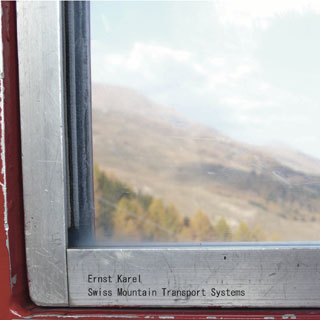
Many of us live in a state of near constant self-imposed sonic stimulation. We are forever talking on cellphones or listening to ipods, rushing from place to place with music and podcasts and satellite radio and videos streaming on our tablets. Meanwhile the world goes on around us. The irony of this is if one knows how to listen to the world - the real world - one can often find a soundtrack equally rich and stimulating and beautiful to anything we can think to cram onto our mp3 players. Ernst Karel - a sound artist and musician from Chicago - demonstrates this truth with jaw dropping aplomb on his latest release, "Swiss Mountain Transport System." The title of this album says it all. At close to 80 minutes in length, Karel offers his listeners a number of unprocessed field recordings taken on various gondolas, funiculars, and chairlifts in the mountains of Switzerland - from ancient, creaking gondolas to whirring, highspeed chairlifts. That's it. No instruments, no electronic processing, no synthesizers or oscillators or guitar feedback. And yet, despite that, Karel has created one of the most gorgeous, engaging, and fascinating albums of the year. It also happens to work almost perfectly as a drone or minimalist noise album. Through Karel's carefully positioned microphones, these means of mountain conveyance can be heard as accidental electro-mechanical music boxes, an entire world of sound contained in each car. They drone, they are percussive, they amplify and refract and echo and encase sound. Wires ring and reverberate, gears rumble and click, doors creak and whoosh. The mechanical and industrial intersects with other elements of the world - murmured voices across platforms, a peal of church bells off in the distance, a clang of cow bells, a clattering of helicopter rotors, frigid gusts of wind.
As Karel captures it, these unprocessed, unorchestrated sounds - largely mechanical and man-made but nonetheless "organic" in that they belong firmly to a lived environment, integrated in with the natural, and are not created as an end in themselves as with music or intentionally crafted sounds but rather exist as a part of the man/nature soundscape that is a byproduct of a world inhabited by living beings - are immensely affective and evocative. For an album that seems to be about movement, about traversing space, these recordings are incredibly successful not because they are beautiful - though they absolutely are - but because they evoke the mountains and they evoke transportation through that rugged terrain in a remarkably lucid way.
Recorded in stereo with multiple mics, this album truly comes to life when heard through a decent set of headphones. The sound envelopes the listener and we are whisked away through the Alps as Karel's recordings convey with remarkable clarity a sense of distance, of movement, of sound as it's really heard, in the real world. A collection of pure field recordings, it is perhaps ironic that in order to hear - as Karel has captured it - not only the utter beauty in the perpetual sonic landscape that surrounds us but also its incredible, inherent musicality that we must sit and listen closely, headphones firmly donned, without distraction. But one of the things that's so special about this album is that once you listen to it in this way, once you recognize the richness and depth of the world of sound that exists outside our headphones and in the most unexpected of places (we don't think of funiculars and gondolas as being all that interesting as such), it's possible to start discovering similar depth in places one experiences daily and simply never pauses to think about twice. As with all important and truly successful art, "Swiss Mountain Transport System" can radically alter the way one perceives the world.
Be warned: this album requires a good deal of patience. Many will find it boring but for those really willing to sit with it, its rewards continue to unfold listen after listen. It's refreshingly direct - a rarity in our world of ultra-processed music - and restrained, elegant and as simple as can be. At the same time, it's deeper and more nuanced than pretty much anything I've heard in a long while. A completely essential listen, one I cannot recommend highly enough.
Best Albums of 2011 #5 The Element Choir and William Parker - At Christ Church Deer Park (Barnyard)

From Barnyard
"this record documents a concert that embodied a set of extraordinary connections. At the heart of these connections are Christine Duncan and Jean Martin, collaborators through the already deeply intertwined projects of Jean’s Barnyard Records and Christine’s Element Choir, the inclusive, community-driven improvising vocal ensemble. Together, these two enterprises account for a significant quotient of the energy that drives Toronto’s field of creative improvised music, and on the cold March night of this event that energy was made palpably, gloriously kinetic. But the connections don’t end there. Notably, this music includes the two other projects that were feted that night separately; Barnyard was launching not only the first Element Choir record, but also a solo disc by New York bass legend, William Parker, and one by the trio of Jim Lewis, Andrew Downing, and Jean Martin. By the end of the evening, all were playing in the chancel of Christ Church Deer Park, where Choir collaborator, Eric Robertson, regularly plays the exquisite Karl Wilhelm organ. The massive sound is dominated by the Choir — fifty-strong on their debut disc — which had swelled to an unprecedented seventy voices that night. Moreover, there was the inaudible-but-inestimable contribution of Jeff Schlanger, the MusicWitness, who painted William during the majestic solo concert that became At Somewhere There, and who was delighted to return to document these record-launch celebrations in his magical way. More than anything, this record is about the connections between all of these extraordinary artists and people — and the selfless urge, clearly shared by everyone there, to celebrate these connections through this music.
This live recording includes:
The Element Choir-seventy voices
Christine Duncan-choir conductor
William Parker-bass
Eric Robertson-pipe organ
Jim Lewis-trumpet
Andrew Downing-bass
Jean Martin-drums, trumophone"
That pretty much says it all. Like all the releases in the top 5 of this list, nothing else that came out this year really sounded like this. It's an incredibly exciting release that highlights the power of the human voice and of large musical collectives. Large form improvisation isn't all that common - improvisers tend to stick to fairly small ensembles in my experience - but this is proof positive that not only is it possible, the results can be pretty astonishing. What's cool about this release is that it doesn't compromise in the slightest artistically and yet it should still be enjoyed by people whose musical interests cover a wide, generally non-overlapping spectrum. Fans of the avant-garde, of the experimental, of choral music and chamber singers and modern a cappella will surely all be floored by the scope of this, one of the most exciting albums of the year.
Tuesday, January 10, 2012
Best Albums of 2011 #6 Red Horse - Red Horse (Type)

There's been some talk of the "punk spirit" of Red Horse. That too feels apt. There's a freewheeling, no-hold-barred energy and a totally DIY approach - most of their instruments and devices are reclaimed or modified or made from scratch - to their music. But at the same time Red Horse surpasses your standard noise group. There's more of the avant-garde to this record, a level of exploration unheard of from most other groups out there. This is one of those records that works perfectly on vinyl as well. Put it on, crank up the volume in your headphones as loud as you can handle it, and listen closely. There's tons to hear beneath the shrieking surface. Just when you're about to be fully, irrevocably swept away by this torrent of noise, side A will spin out and you'll have a few moments of respite before plunging - all too willingly - into the pummelling depths of side B.
Sunday, January 8, 2012
Best Albums of 2011 #7 Bill Orcutt - How the Thing Sings (Editions Mego)

This is deeply emotional and affecting music, tapping into something primal both in form and in substance. Orcutt's not only an amazing guitarist because he can play his instrument with a blazing, superhuman speed and intensity but because he can make it say things no words could muster, can root out something deep and dark from the musician and the listener. How the Thing Sings is intensely powerful music and an absolute must-listen.
Subscribe to:
Posts (Atom)