Wednesday, December 7, 2011

2011 Mix Tape #2

Here's mix number two containing tracks exclusively from 2011. As with the first one, there's a few tracks from the upcoming Best of 2011 list but a bunch are not. There's math-y post-rock from And So I Watch You From Afar, manic yet virtuosic acoustic guitar playing from Bill Orcutt, melancholy strings and drone from A Winged Victory for the Sullen, and mechanical clatter and buzz from Ernst Karel's field recordings plus 11 more. All of them come from cool albums that are well worth your time and money in any case.


1. Mogwai - Mexican Grand Prix
2. Lee Noble - Desire Isn't Suffering
3. And So I Watch You From Afar - BEAUTIFULUNIVERSEMASTERCHAMPION
4. Danny Paul Grody - Hello From Everywhere
5. Evangelista - Artificial Lamb
6. Bill Orcutt - Till I Get Satisfied
7. Ben Frost and Daniel Bjarnason - Venia
8. The Drift - The Skull Hand Smiles/May You Fare Well
9. Jon Porras - Calm
10. A Winged Victory for the Sullen - Steep Hills of Vicodin Tears
11. Ezekiel Honig - Subverting the Memory of Your Surroundings
12. Ernst Karel - Stans-Kalti
13. Higuma - Burning Colors
14. Grouper - Water People
15. Colin Stetson - From No Part of Me Could I Summon a Voice

Sunday, December 4, 2011

2011 Mix Tape #1

Here's a mix tape featuring music exclusively from 2011. Some of the tracks here come from albums on the forthcoming Hollow Press Best of 2011 list but several are from elsewhere. There's a good bit of diversity here, from the moody, gothic atmosphere of Zola Jesus' pop to the relentlessly abrasive mechanical percussion of Red Horse's sound art, and from the melancholy drone of Nest to the cosmic synths of Motion Sickness of Time Travel, with plenty in between. Take a listen. A couple more mixes should be on the way before year's end!


1. Zola Jesus - Vessel
2. Blackout Beach - Hornet's Fury into the Bandit's Mouth
3. Red Horse - Part 1
4. Pete Swanson - Misery Beat
5. Roll the Dice - See You Monday
6. Juv - Lys
7. Julie Holter - The Falling Age
8. Isidore Ducasse - Here's Lies a Youth Who Died of Consumption
9. Matt Christensen - Simple Lives Mean Nothing
10. Nest - Koretz's Meteor
11. Motion Sickness of Time Travel - Like Dunes
12. Tim Hecker - Analog Paralysis, 1978
13. David Lynch - She Rise Up
14. The Caretaker - Mental Caverns Without Sunshine

Friday, December 2, 2011

Best of 2011 - Best Label: Type

Over the next couple weeks, I'll be rolling out Hollow Press' Best Albums of the Year list. To change things up and make the formatting a little more intuitive, I'll be counting down with one post per day over December, starting with album number 12 and working down to album number 1. Some of these albums have been posted here before, most haven't. This was a tough list to make. When I initially put together all the albums that really grabbed me from the past 12 months, the list ran up toward 40 in number. Obviously in the name of brevity and sanity, I'll only be posting what I ultimately, and perhaps even a little arbitrarily, decided were my top 12 and maybe a handful of runners up. These lists are always problematic since, if I set about choosing a top 12 one month ago or one month from now, there would be at least a few different albums and almost certainly a different order for the ones that remained. Of course, I like making lists like this and now seems as good a time as any. And, it goes without saying, all twelve albums are really brilliant in any case and well worth buying (although, unless and until asked to remove them, there'll be links for you fine folks to give them a listen).

Before I begin the countdown, I need to single out what in my mind is easily the best label from the past year and quite possibly the best label currently operating. Type Records, run by Bostonian-by-way-of-England John Twells (perhaps best known his music under the Xela moniker) has an output of unimpeachable quality. More than that, however, is Twell's dedication to releasing a vast range of musical styles and genres, all with impeccable album art, on superb sounding vinyl, with stellar bonuses from cool colored vinyl to album-length CDs of bonus material included with initial vinyl pressings. Consider some of the albums that came out on Type in 2011: Deaf Center's Owl Splinters out of Norway is dark and deep drone music for cello and piano, processed into a mysterious, expansive fog, epic and dense. Rene Hell's The Terminal Symphony is an album of studied, meticulous synthesizer journeys exploring themes and motifs more often found in classical symphonies. Ezekiel Honig's Folding in on Itself is a gorgeous, melancholy album made from field recordings of New York City, deeply submerged beats, decaying acoustic instruments, and skittering percussion. John Mueller's Alphabet of Movements is pure percussion, a hypnotic, cacophonous, and cathartic squall. Clam Casino's Instrumentals is straightup instrumental hip hop. Red Horse's self-titled album is an unrelentingly intense and abrasive noise album that relies largely on a veritable arsenal of homemade acoustic instruments, motors, and wire boxes, a decidedly DIY punk approach to generally more staid avant-garde and abstract sound art. William Fowler Collins' The Resurrection Unseen is like a black metal album that has been power sanded down to pure texture, utterly dark, challenging, and almost impossibly bleak. And so on.

Twells seems convinced that his label should be a vehicle for music he thinks is great, regardless of what form it takes. Many fans on the Type forums and elsewhere seemed perplexed by Twells' decision to release an instrumental hip hop album. The fact is, it's definitely not the best thing Type put out this year but it's a damn cool record, one I and many others would probably never have come across had it not come out on Type. The world of noise and drone can be insular and, given the number of great albums that come out under those admittedly broad and more or less meaningless genre designations, it can be very easy to ignore everything else. While many labels pick one sound and stick to it come hell or high water, with each new Type release a listener can be sure of hearing something engaging and new and exciting. A handful of Type albums are on my current top 12 list. Earlier iterations of the list contained as many as 5. A top 25 would, for example, easily contain that many and probably more.

On top of the sheer quality and scope of Type's output, the label deserves a nod for its album artwork and design. A big reason many people like vinyl - apart from the boost in audio fidelity - is that album sleeves can be pieces of art. Type's record sleeves are, with few exceptions, gorgeous. They are generally very minimal. No words appear on the front of the sleeves and the images are generally quite abstract. Rather than describe them, I've posted a bunch below. Of course, these pictures don't do them much justice. The sleeves are always on matte stock which give them an amazing tactile quality and often contribute to the look of the artwork as well, adding texture and heft to what could on a different medium be flat and glossy. This may seem like an odd thing to praise but it's the things like this that demonstrate an absolute commitment to all the details of a release. The music is obviously what's most important but artwork plays a big role in how we as listeners can experience an album. And, of course, those vinyl-only bonus CDs that come with a bunch of Type releases are always flat out brilliant, essentially giving the buyer two albums for the price of one. Sure, an online store and high quality mp3 download codes with vinyl would be very welcome additions and an insert here and there might be cool but Type has a fairly minimalist aesthetic and I totally respect that.

Perhaps this seems overly effusive so I'll end here. But I will say that if you explore the output of any label you weren't previously aware of or weren't wholly familiar, Type should be it. Indeed, its entire back catalog is equally rich. Here's to another stellar year in 2012.


Thursday, December 1, 2011

Julia Holter - Tragedy


Fans of deep, female led, space-y, blissed out drone-pop - artists like Grouper, Motion Sickness of Time Travel, Pocahaunted, even Zola Jesus - rejoice: Julia Holter's Tragedy is a staggeringly good debut (Holter has put out a handful of small releases but this is her first proper album), an album that's noisy and dreamy, rich in resplendent drone, with a sonic palette that runs the gamut from abstract, avant-garde noise and gothic atmospherics, to reverb soaked ghostliness and almost pop-y hooks, pulling in elements of woodsy folk and psychedelia along the way. Oh, and it's based on Hippolytus by Euripides. Despite some similarities, Holter's compositional range is actually broader than a lot of her contemporaries. I love the work of Liz Harris and Rachel Evans as much as the next guy but each of their individual albums has a distinct, fairly fixed sound to it. This isn't a bad thing - especially when that sound is often so good to begin with - but in some ways Tragedy is more engaging from start to finish for its broader scope and greater complexity.

While Evans' work is often fairly cosmic in a sort of minimal, skeletally framed kind of way and Harris' is drowning in reverb, an impossibly deep and distant  and melancholy sound, Holter's work here is often far darker, almost doom-y, and generally more complicated, shifting and overlapping compositional styles with ease. It makes sense that an album based on a Greek tragedy - one that even draws lyrical content from the text of that tragedy - would be dark. But Holter moves beyond the staid and formalized tone of her source material to create something big and unnerving and powerful, an emotional work that knows when to pull back and never goes too heavy on the pathos or melodrama but can still move and surprise and unsettle a listener.


Tragedy is hard to classify or pin down. Consider the opening track. It begins with an insectoid buzz. There's a distant fog horn shrouded in sonic mist and intermittent blasts from what sounds like a bass saxophone. Then an old opera record kicks in, rife with static and wear, old-timey strings rise and fall when suddenly you become aware of Holter's humming rising up through the mix, slicing through layers of fragile static pulse. It's surprising and strange and compelling, a clashing tapestry of sound and a telling sign of what's to come. Throughout, vocals switch from straight up pop vocalization to choral chants with layered vocals a la Julianna Barwick, to vocodored, cyborgish passages of disjointed narrative and are sometimes all three at once in an overlapping polyphony. Many of the pieces consist mainly of winding, slowly building instrumentals. The crackling of old phonographs or disintegrating tapes whisper under discordant, jarring piano, woozy, atonal strings, humming synthesizers and organ, eerie, gaseous decay, skittering, jangling percussion, garbled field recordings, blasts of lowing brass. There's melodies here and even hooks but when they appear they are often deeply buried or come gusting up out of turbulent audio collages and fractured drones and pulsing harmonics. Tragedy is definitely an accomplished piece of work. As I slowly compile my "Best Albums of 2011" this blog, I'm having a hard time imagining a list without this one on it.

Buy 
(if you want to buy this on vinyl, act fast. 
The first edition sold out quickly
and the second one is equally limited)


Tune in soon for posts featuring Roll the Dice, Danny Paul Grody, Nate Wooley, Catherine Christer Hennix, and Hollow Press' favorite albums of 2011 (possibly including a mixtape or two for the uninitiated and/or curious).

Wednesday, November 9, 2011

Merce Cunningham's Pond Way

Choreography by Merce Cunningham, sound by Brian Eno, set by Roy Lichtenstein

Monday, October 31, 2011

Wednesday, October 26, 2011

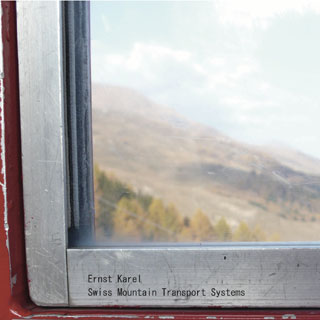
Ernst Karel - Swiss Mountain Transport Systems (Gruenrekorder)


Many of us live in a state of near constant self-imposed sonic stimulation. We are forever talking on cellphones or listening to ipods, rushing from place to place with music and podcasts and satellite radio and videos streaming on our tablets. Meanwhile the world goes on around us. The irony of this is if one knows how to listen to the world - the real world - one can often find a soundtrack equally rich and stimulating and beautiful to anything we can think to cram onto our mp3 players. Ernst Karel - a sound artist and musician from Chicago - demonstrates this truth with jaw dropping aplomb on his latest release, "Swiss Mountain Transport System." The title of this album says it all. At close to 80 minutes in length, Karel offers his listeners a number of unprocessed field recordings taken on various gondolas, funiculars, and chairlifts in the mountains of Switzerland - from ancient, creaking gondolas to whirring, highspeed chairlifts. That's it. No instruments, no electronic processing, no synthesizers or oscillators or guitar feedback. And yet, despite that, Karel has created one of the most gorgeous, engaging, and fascinating albums of the year. It also happens to work almost perfectly as a drone or minimalist noise album. Through Karel's carefully positioned microphones, these means of mountain conveyance can be heard as accidental electro-mechanical music boxes, an entire world of sound contained in each car. They drone, they are percussive, they amplify and refract and echo and encase sound. Wires ring and reverberate, gears rumble and click, doors creak and whoosh. The mechanical and industrial intersects with other elements of the world - murmured voices across platforms, a peal of church bells off in the distance, a clang of cow bells, a clattering of helicopter rotors, frigid gusts of wind.

As Karel captures it, these unprocessed, unorchestrated sounds - largely mechanical and man-made but nonetheless "organic" in that they belong firmly to a lived environment, integrated in with the natural, and are not created as an end in themselves as with music or intentionally crafted sounds but rather exist as a part of the man/nature soundscape that is a byproduct of a world inhabited by living beings - are immensely affective and evocative. For an album that seems to be about movement, about traversing space, these recordings are incredibly successful not because they are beautiful - though they absolutely are - but because they evoke the mountains and they evoke transportation through that rugged terrain in a remarkably lucid way.

Recorded in stereo with multiple mics, this album truly comes to life when heard through a decent set of headphones. The sound envelopes the listener and we are whisked away through the Alps as Karel's recordings convey with remarkable clarity a sense of distance, of movement, of sound as it's really heard, in the real world. A collection of pure field recordings, it is perhaps ironic that in order to hear - as Karel has captured it - not only the utter beauty in the perpetual sonic landscape that surrounds us but also its incredible, inherent musicality that we must sit and listen closely, headphones firmly donned, without distraction. But one of the things that's so special about this album is that once you listen to it in this way, once you recognize the richness and depth of the world of sound that exists outside our headphones and in the most unexpected of places (we don't think of funiculars and gondolas as being all that interesting as such), it's possible to start discovering similar depth in places one experiences daily and simply never pauses to think about twice. As with all important and truly successful art, "Swiss Mountain Transport System" can radically alter the way one perceives the world.

Be warned: this album requires a good deal of patience. Many will find it boring but for those really willing to sit with it, its rewards continue to unfold listen after listen. It's refreshingly direct - a rarity in our world of ultra-processed music - and restrained, elegant and as simple as can be. At the same time, it's deeper and more nuanced than pretty much anything I've heard in a long while. A completely essential listen, one I cannot recommend highly enough.


Link Removed by Request


Monday, October 24, 2011

Maryanne Amacher at Ars Electronica, 1989


Thanks to Maxwell @ Root Blog for the link


more posts coming soon, including stuff by Ernst Karel, Catherine Christer Hennix, Roland Kayne, Aaron Martin and more.

Saturday, October 1, 2011

Svarte Greiner - Twin and Miscellanea


Svarte Greiner is the solo project of Norway's Erik K. Skodvin, perhaps better known as one-half of Deaf Center. For years now, Skodvin has been taking cello, electronics, tape, and what sounds like mic'd scrap metal and turning out haunted soundscapes, blackened to a pitch, steeped in nightmares, owing, it seems, a huge debt to our primal fear of things that go bump in the night. Earlier this year, Deaf Center put out their newest album, the obliquely titled Owl Splinters, and included with a limited number of the first pressing a bonus CD. Type, the label that put out Owl Splinters, has gotten into the habit of doing this, rewarding fans who manage to snap up a copy of many of their albums before they inevitable go out of print and start selling for four times the original price on discogs and ebay. Recent LPs by Yellow Swans, Richard Skellton, Jefre Cantu-Ledesma, and Rene Hell to name just a few all had free bonus CDs. It's a really wonderful trend, especially since these bonus CDs are far from random, cast-off freebies; Generally they account for enough music to constitute a wholly separate album. That's certainly the case here with Twin,  Owl Splinter's bonus CD containing a single, nearly 46-minute track from Skodvin under the Svarte Greiner moniker. It's hard to tell but this piece may be a reworking of material from Owl Splinters. In any event, it's entirely it's own beast and probably the best thing Svarte Greiner has done to date.

Twin starts off with an oceanically deep loop of droning processed cello. It almost sounds like the solemn chanting of a long forgotten sect of Alpine monks huddled in their frost encrusted monasteries hewn from the mountains themselves. This loop builds upon itself, adding dimensions, taking on a ragged edge, pulsing with sinister harmonics, fraying tendrils of static, a sawing rasp of tangled feedback. The intensity rises through the first third, eerie and laden with menace, the sound, perhaps, of a fractured and ever-disintegrating world. At the same time it is an ancient, almost primal sound. This isn't music for the end of the world by machines; rather it is the soundtrack to the terror of night and the unknown violence therein surely felt by our early ancestors, cavemen praying for a splinter of flint to throw - even for a moment, even if just a spark - some light into the perpetual black. A slowly heaving, wailing, crumbling, roaring pulse of drone washes over the listener.

Around the 16-minute mark, things change. The bellow and roar of the first third is gone. A siren-like sweep of electronics washes out over an utterly desolate expanse of ghostly ambiance. A tangle of murmuring, chaotically bowed strings rises and falls through a dank mist of analog murk - reminiscent of Xela's The Sublime but less minimal, more deeply layered. Percussion like snapping tree limbs, rusted metal on rusted metal, creaking door hinges is woven into this tapestry or sound

Twin's final third is almost suffocatingly intense. Loops of decaying cello, a funereal organ, disintegrating bits of tape and static - dissolving audio detritus threaded throughout. The final minutes are all organ in full dirge, long forgotten radios playing out their final, static-ridden moments of life. It's black as pitch, an apocalyptic, scorched earth blast to sing us into oblivion.

And yet, despite all this, Twin is exceptionally beautiful. Bleak, yes, but it's clearly the work of a master craftsman. Immensely affective and evocative, fans of drone, noise, and even modern and avant-garde classical alike should give this a serious listen.

Included in the download are some other rare Svarte Greiner goodies. Rips of the Ragsokk and Depardieu 7"s from 2006, plus a track from the SMM: Context compilation put out by Ghostly International last year and the 18-minute long "A Night Without Harm," a live recording from early 2007. Nightmares for everyone!!

Saint Yorda

I don't know much about Saint Yorda - or anything really - other than one of the members of the band is named Kevin and he sent me this link. I'm pretty sure "Some Songs That We Recorded With Cathal" isn't an album title and this is more or less a collection of songs but it's well worth a listen in any case. If you live in the North East, autumn is officially underway and this collection of songs is perfect for the season. Languid and cool, a bit foggy, these songs make a great soundtrack to chilly, gray fall days like these. There are vocals with some wavering echo and reverb, skeletal electronic beats and a scattering of bleeps and bloops - syncopated, almost danceable in a kind of codeine-induced way (especially on the track "Sakawa Boys"). Some of the band's influences seem pretty clear. Beach House fans will fall in love with a lot of these tunes. The track "Ocean" quavers and thrums like a Grouper track. "Death Ray" sounds a heck of a lot like more recent Radiohead tracks in the best possible way. "Surf Song" is just that - a very surf-y track but more along the lines of something Julian Lynch or possibly even Dirty Beaches might turn out with an ultra-simple drum machine loop adding percussion. "Yr Bones" is a mournful, synth heavy song, reminiscent of a sad song off a soundtrack to a John Waters movies. None of which is to say the band is mimicking these artists. Saint Yorba definitely has a sound of its own but it's one that cuts across a bunch of genres that other artists have colonized. In any event, it's well worth a listen. Check out some of their tunes below and follow the link to their bandcamp page where there's more to hear and download.


Bandcamp